

Special Edition: The State of Travel: What’s Happening at U.S. Airports Right Now
- Inspired Traveler Team
- Mar 27
- 4 min read

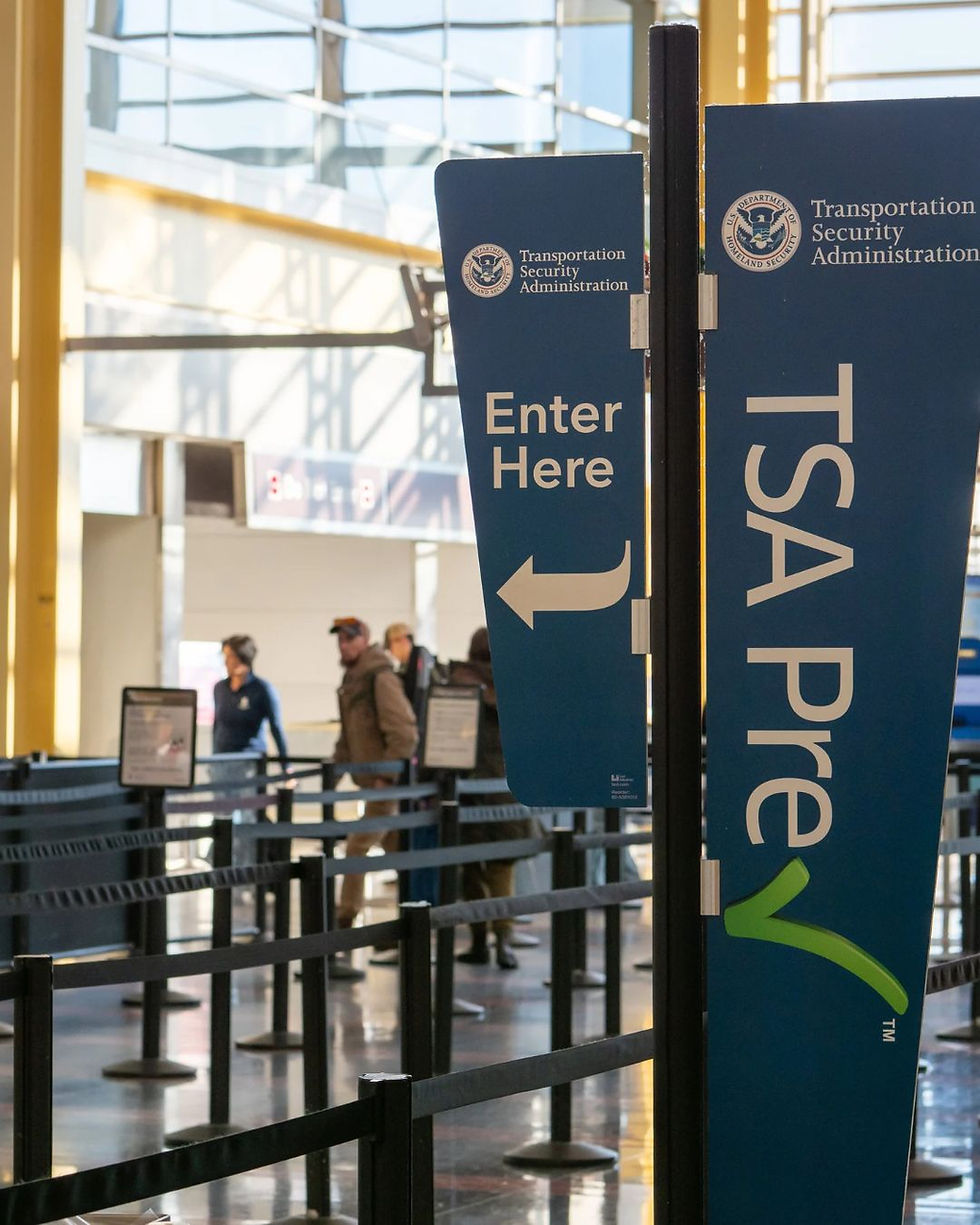
At Inspired Traveler, we believe in keeping our travelers informed. Not alarmed, not overwhelmed, but aware of what’s happening in real time and how it may shape your experience.
Right now, something is shifting across U.S. airports.
“I got there three hours early and still almost missed my flight,” one traveler shared after departing from Hartsfield-Jackson Atlanta International Airport.
Another described moving through John F. Kennedy International Airport, where the line “wrapped so far back it didn’t even feel like an airport anymore.”
And yet, that has not been everyone’s experience.
One of our Inspired Travelers, flying into Ronald Reagan Washington National Airport from Toronto this week, shared that their journey was smooth, with no delays or notable issues.
Another, traveling from Nashville to Phoenix Sky Harbor International Airport, arrived early, moved through without disruption, but still noted a sense of general unease in the airport environment.
That contrast is important. The experience right now is not universal. It is uneven, and that is part of what makes it harder to predict.
What’s Driving the Shift
In early March 2026, a partial federal government shutdown tied to Department of Homeland Security funding began to impact airport operations. The Transportation Security Administration (TSA) has remained operational, but under strain.
Fewer officers are available. Absenteeism has increased. At the same time, travel demand continues to rise.
What makes this moment different is how that strain is showing up in real time:
Travelers in some airports are reporting 2 to 3 hour wait times during peak periods
In others, lines have stretched beyond 4 hours, occasionally spilling outside terminals
In more extreme cases, delays have approached 4 to 5 hours, far beyond typical expectations
For context, under normal conditions, TSA aims for wait times of under 30 minutes for standard screening.
The gap between expectation and reality is where many travelers are feeling the difference.
Where ICE Is Showing Up
To support operations, officers from U.S. Immigration and Customs Enforcement (ICE) have been deployed across a growing number of airports.
According to recent reporting, confirmed locations include:
O'Hare International Airport
Cleveland Hopkins International Airport
Hartsfield-Jackson Atlanta International Airport
William P. Hobby Airport
John F. Kennedy International Airport
LaGuardia Airport
Louis Armstrong New Orleans International Airport
Luis Muñoz Marín International Airport
Newark Liberty International Airport
Philadelphia International Airport
Phoenix Sky Harbor International Airport
Pittsburgh International Airport
Southwest Florida International Airport
Additional reports have noted ICE presence at:
Washington Dulles International Airport
Ronald Reagan Washington National Airport
They are not conducting full TSA screenings and are generally assisting with identification checks or helping manage passenger flow. “But they still have the other mandate, that is, ICE is an agency that's created for enforcement, within the U.S., and so that will still be with them. While they're there, they will carry out what they believe is their charge of identifying potential immigrants who are not in this country legally," Tom Homan (via NPR).
As of March 25, there was cautious optimism that a deal to fund DHS could be on the horizon. If reached, TSA agents would be paid and staffing could stabilize, bringing relief to strained airport operations.
What remains unclear is how long ICE will remain in airports, or whether their presence could continue in any capacity beyond the immediate need.
The Experience Behind the Headlines
Operationally, this is about staffing. Experientially, it is about how that shows up for travelers. For some, this means longer lines and earlier arrivals. For others, the presence of ICE changes the emotional experience of being in an airport. Even without direct interaction, visibility alone can introduce a sense of uncertainty.
For immigrant communities, mixed-status families, or those who have had prior experiences with immigration systems, that feeling can be significant.
And for some, it is enough to make them reconsider whether they want to travel at all.
How Travelers Are Adjusting
Some travelers are arriving earlier, building in more time than usual. Others are choosing different ways to travel altogether. “I just booked a train,” one traveler shared after reconsidering a short flight. “It felt easier.” An Inspired Traveler Team member spoke with a traveler who drove from Atlanta to Orlando due to the congestion at Hartsfield.
For regional trips, trains are becoming a more appealing option again. Driving offers flexibility and control. Cruises, for longer travel, continue to provide a more contained and predictable experience once onboard.
What You Can Do Right Now
Travel is still happening. People are still getting where they need to go.
What has changed is the feeling of getting there. And if you’re noticing that, you’re not alone.
This is a developing situation, and conditions may shift quickly depending on staffing, location, and travel volume. A little preparation can go a long way.
Here are a few things to keep in mind:
Give yourself more time than usual
Aim for at least 4 hours at major airports, especially during peak travel windows
Check your specific airport the day of travel
Conditions are highly location-specific right now
Call the airport directly if you can
Local updates are often more accurate than general advisories
Pack strategically
If you’re checking a bag Keep fewer items with you at security, wear minimal layers or accessories, and simplify what you carry so you can move through TSA more efficiently
Have your documents ready and easily accessible
Short delays can add up quickly in longer lines
Review your travel insurance coverage
Staffing-related delays are not always treated the same as weather disruptions
Consider alternatives for shorter trips
Trains or driving may offer a more predictable experience
We’ll continue to keep a close eye on what’s evolving, including alternative ways to travel more comfortably and predictably, and we’ll share more in an upcoming edition.
In the meantime, we’d love to hear from you.
How are you feeling about traveling right now?
Enjoyed reading this post. Sign up for our newsletter here.
Sources
USA Today - “Which airports have ICE officers been sent to? Here's what to know”By Nicole Fallert, March 25, 2026
Reuters - TSA staffing shortages and airport delays (March 2026)
Associated Press - TSA wait times and operational strain (March 2026)
The Washington Post - TSA wait time expectations and airport guidance (March 2026)
Business Insider - Traveler-reported airport experiences and delays (March 2026)
NPR - Trump has deployed ICE agents to the nation's airports. What's their role? (March 2026


Comments